
Achilles Tenotomy Information
Achilles Tenotomy for Clubfoot
In Ponseti clubfoot treatment, over 90% of children require a tenotomy procedure (Achilles tendon heel cord release) to achieve full correction of their foot position. Lengthening the Achilles tendon allows the foot to flex upward properly, which helps the child place their foot flat on the floor, which is an important step for walking.
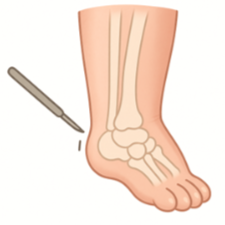
A tenotomy is a small surgical procedure in which the Achilles tendon (heel cord) is cut to allow it to lengthen and then reform in a proper length in cast. This is performed under local anaesthesia in the clinic setting. Your baby does NOT need to fast from milk prior to the procedure. After the procedure, a cast is applied to help the tendon heal in its new position.
How the Procedure is Performed
The Pediatric Orthopedic Surgeon obtains your consent. Local anaesthetic cream is applied by the nurse to the ankle /heel area of your baby’s foot and left in place 30-45 minutes to numb the skin and the deeper structures. The procedure is then performed. Parents are not present during the procedure. A paediatric nurse remains with the baby at all times. During the procedure, local anaesthetic, sucrose (for pain relief), milk, a soother, and your choice of music are used to help keep your baby comfortable.
A small incision, approximately the size of a ballpoint pen tip, is made above the heel bone to release the tendon. No stitches are required; small adhesive surgical strips and gauze are used instead. Once the procedure is complete, a new cast is applied. The procedure usually takes around 20–30 minutes per foot, including the cast(s). Casts remain for a total of an additional 3 weeks while the tendon heals in the lengthened position.
Post-Procedure Information
Cast Care
Occasionally caregivers may notice a small blood stain at the back of the cast following the procedure. This should be no larger than the size of a Loonie coin (about 2.5cm) and should not increase in size. If the stain grows, or if you notice other issues such as slipping (fewer toes visible), tightness, or if the cast becomes wet or soiled, please contact your orthopaedic clinic.
Pain Relief
The local anaesthetic given during the procedure provides pain relief for around 4–5 hours. Acetaminophen (Tylenol) should be given for the first 24 hours, as directed on the bottle if your baby seems uncomfortable. It is common for babies to be unsettled during the first 24 hours after the procedure, but they return to their normal temperament within 24 hours.
Follow-Up
Casting period after the procedure lasts approximately 3 weeks. It is not uncommon to change the cast mid-way through this period depending on the foot correction initially obtained with the procedure. After the cast is removed, your baby will be fitted with boots and a bar brace (B&B) to begin the next stage of Ponseti treatment. The brace should be worn for 23 hours per day during the first 3 months, and then during nights and naps until age 4-5 years to prevent recurrence.
Local Practice May Vary
This resource is intended to provide general educational information for families. Treatment plans, procedures, and follow-up schedules may differ based on your child’s diagnosis, age, response to treatment, and the practices of your local healthcare team. This information does not replace medical advice. Please contact your clinic if you have questions or concerns.
When to Seek Help
Contact your orthopaedic team or seek medical help if you notice any of the following:
· Changes in toe colour or temperature
· The cast has slipped or appears too tight
· Toes are less visible than before
· The cast becomes wet or contaminated
· Your baby appears unusually distressed or in pain
· Ongoing bleeding is present (blood stain larger than a Loonie, about 2.5cm, and growing)
This information sheet has been adapted for use by families receiving care by clinical members of UBC Orthopedics Division of Pediatric Orthopedics. The information contained in this fact sheet is intended to assist, not replace, discussion with your doctor or health care professional. UBC Orthopedics does not accept any responsibility, and will not be liable for, any inaccuracies, omissions, information perceived as misleading, or the success of any treatment regimen detailed in the fact sheet.